Before You Build on a Waterfront Lot, Read This!
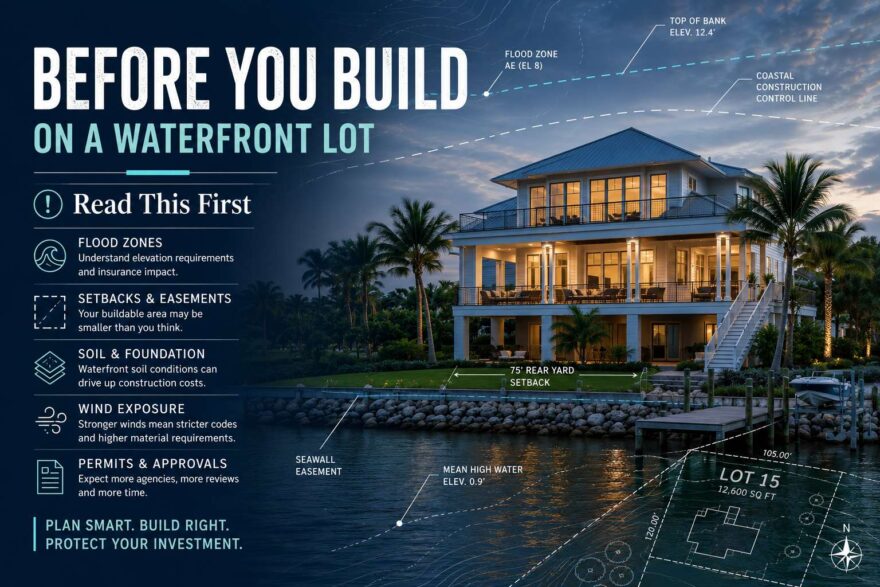
Building on a waterfront lot sounds simple in theory. The views are incredible. The lifestyle is hard to beat. However, waterfront construction comes with challenges many buyers never see coming until the process gets expensive.
The lot itself often determines what you can build far more than the house plan does.
Before purchasing a waterfront house plan or starting construction, here are the most important things every waterfront property owner should understand.
1. Your Buildable Area May Be Much Smaller Than You Think
One of the biggest surprises with waterfront lots is how much land you actually cannot build on.
Many waterfront properties have:
• Environmental setbacks
• Coastal construction control lines
• Seawall easements
• Wetland buffers
• Drainage easements
• Height restrictions
• Lot coverage limitations
A lot may look large on paper but have a very limited footprint once local regulations apply.
This affects:
• Pool placement
• Garage size
• Outdoor living areas
• Overall house width
• Setbacks from the water
Before selecting a house plan, always request a current survey and verify the true buildable envelope with local zoning officials.
2. Flood Zones Change Everything
Before purchasing a waterfront house plan or starting construction, check your property’s flood designation using the FEMA Flood Map Service Center. Flood zones can dramatically impact elevation requirements, insurance costs, and construction budgets.
If your lot falls within a FEMA flood zone, your home may require:
• Elevated living areas
• Breakaway lower walls
• Specific foundation systems
• Engineered flood vents
• Higher finished floor elevations
These requirements can significantly increase construction costs. Additionally, flood insurance premiums vary dramatically depending on elevation and location.
A lower-priced lot can quickly become far more expensive once flood compliance enters the equation.
Always verify:
• FEMA flood zone designation
• Required base flood elevation
• Local freeboard requirements
• Flood insurance estimates before building
Do not assume neighboring homes were built under current code standards. Many older waterfront homes would not meet today’s requirements.
3. Soil Conditions Matter More Near Water
Waterfront soil conditions can create major engineering challenges.
Some waterfront lots contain:
• Loose fill material
• High water tables
• Soft soils
• Sand instability
• Erosion concerns
These conditions often require:
• Deep pilings
• Stem wall foundations
• Additional compaction
• Specialized engineering
• More extensive drainage systems
Foundation upgrades alone can add substantial cost to a project.
Always complete proper geotechnical and soil testing before finalizing construction budgets.
4. Wind Exposure Changes Structural Requirements
Waterfront homes usually experience stronger wind exposure than inland properties.
Open water leaves structures more vulnerable during storms.
Depending on location, this can impact:
• Window requirements
• Roof design
• Garage door ratings
• Structural connections
• Roofing materials
• Exterior product choices
Coastal wind codes can add considerable expense, especially in hurricane-prone areas.
Large walls of glass may look stunning on a floor plan, but impact-rated systems are expensive and often affect the overall budget quickly.
This is especially important when comparing plans online. A design built inland may require major structural upgrades for coastal conditions.
5. Drainage Problems Can Ruin a Waterfront Property
Poor drainage creates serious problems on waterfront lots.
Heavy rain, tidal conditions, and high water tables can cause:
• Standing water
• Foundation movement
• Pooling near the home
• Landscaping failure
• Seawall pressure issues
A beautiful lot can become difficult to maintain without proper grading and drainage planning.
Pay close attention to:
• Site elevation changes
• Stormwater management
• Existing drainage patterns
• Retaining wall needs
• Seawall conditions
Drainage planning should happen early, not after construction begins.
6. Not Every House Plan Works Well on Waterfront Property
Many buyers choose a house plan based entirely on curb appeal. That approach often backfires on waterfront lots.
Waterfront living should maximize:
• Rear-facing views
• Natural light
• Outdoor living access
• Lanai functionality
• Pool orientation
• Indoor-outdoor flow
The best waterfront house plans focus heavily on the rear elevation, not just the front exterior.
Window placement also matters. A poorly designed layout can waste the best views on hallways, bathrooms, or secondary spaces.
Before selecting a plan, think carefully about:
• Sun direction
• Privacy from neighboring homes
• Wind exposure
• Boat access
• Outdoor entertaining
• Future seawall or dock needs
7. Permitting Takes Longer Than Most Buyers Expect
Waterfront permitting often involves additional agencies and approvals.
Depending on location, approvals may include:
• Environmental reviews
• Coastal permitting
• Seawall approvals
• Dock permits
• Drainage reviews
• FEMA compliance verification
This process can add months to a project timeline. Many buyers underestimate how long waterfront permitting can take compared to standard residential lots. Patience becomes part of the process.
8. Budget for More Than Just the House
Waterfront construction usually involves additional site-related costs beyond the home itself.
These may include:
• Seawall repairs
• Dock construction
• Elevation work
• Imported fill
• Specialized landscaping
• Drainage systems
• Larger utility runs
• Impact-rated materials
These expenses add up quickly and are often overlooked during early budgeting. The lot price is only part of the total investment.
Final Thoughts
A waterfront lot can create an incredible lifestyle and long-term value. However, waterfront construction requires careful planning from the beginning.
The smartest waterfront buyers focus on the lot first and the house plan second.
Understanding flood zones, setbacks, soil conditions, drainage, and structural requirements early can prevent expensive surprises later.
Most importantly, choose a house plan designed to truly take advantage of waterfront living — not just one that looks impressive from the street.
If you are planning to build on a waterfront property, explore our collection of waterfront house plans designed for outdoor living, natural views, and coastal lifestyles.