What to Look for Before Purchasing a House Plan

Purchasing a house plan is one of the most important decisions in the home building process. However, many buyers focus only on square footage or exterior style. While those elements matter, they represent only a small part of what makes a house plan truly successful.
A well-chosen house plan must work with your lot, your lifestyle, and your construction budget. Otherwise, even a beautiful design can create unnecessary complications during construction.
Before purchasing a house plan, take time to carefully evaluate the following factors.
Start With Your Lot
Your lot should influence your house plan selection more than any other factor. Unfortunately, many buyers fall in love with a plan before confirming that it will actually fit their property.
First, verify the buildable width and depth of the lot. Local zoning regulations typically require setbacks, which are minimum distances the home must sit away from property lines. These setbacks can significantly reduce the space available for the house footprint.
In addition to setbacks, check for utility easements. Easements allow utility companies access to certain portions of the property for power lines, drainage, water, sewer, or other infrastructure. These areas often cannot be built on, which further limits the usable building area.
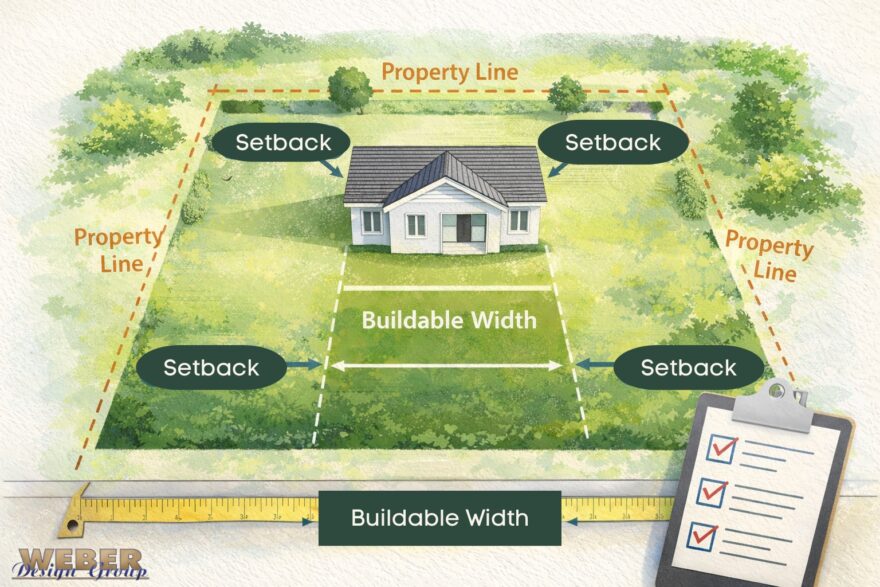
Next, consider how the home will sit on the property and how it will face the surrounding environment. The orientation of the home can affect natural light, views, and overall comfort.
Some homeowners prefer a rear living area that captures sunset views, while others prefer morning sunlight in the kitchen or breakfast area. Understanding how the sun moves across your property can help you position the home in a way that improves both livability and energy efficiency.
Lot slope should also be evaluated early. Flat lots accommodate most house plans easily, while sloped lots may require stepped foundations, daylight basements, or additional grading.
Selecting a plan that works naturally with your lot will help avoid expensive redesigns later.
Think About Natural Light and Orientation
Natural light has a powerful influence on how a home feels throughout the day.
Window placement should allow daylight to reach the primary living spaces, particularly the kitchen, dining area, and great room. However, the orientation of the home on the lot plays an equally important role in how that light enters the home.
For example, a rear-facing great room that faces west may capture beautiful sunset views, while an east-facing kitchen or breakfast area may enjoy morning sunlight.
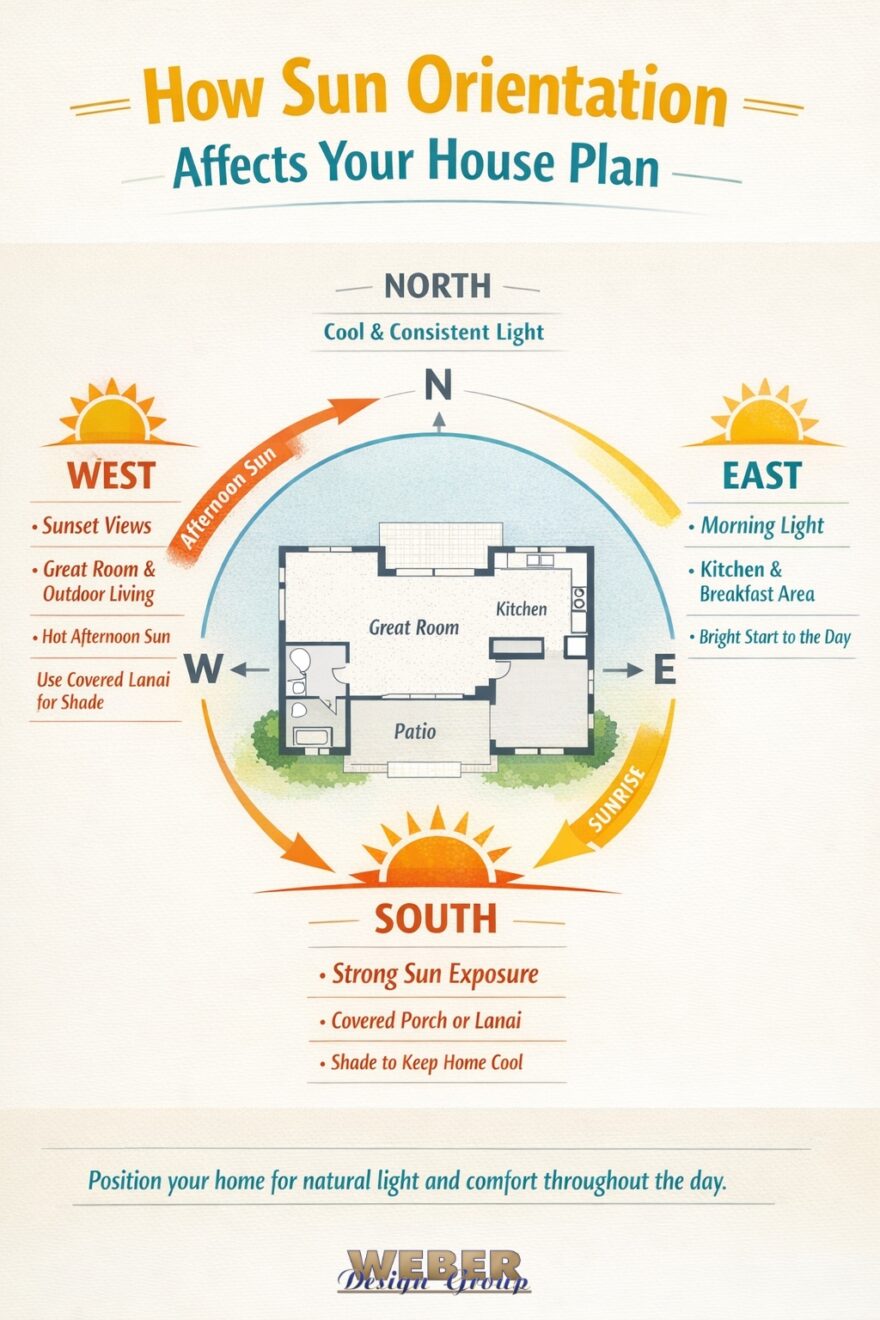
In warmer climates and coastal areas, it is also important to think about managing sunlight, not just capturing it. Features such as covered lanais, porches, and outdoor living spaces help shade interior windows and reduce direct sun exposure during the hottest parts of the day.
These covered outdoor areas act as a buffer between the interior living space and the outdoors. They allow homeowners to enjoy outdoor living while also helping keep the interior cooler and more comfortable.
Large rear windows combined with shaded outdoor spaces can create a bright interior without excessive heat gain. This balance is especially important in Florida and island environments.
Study the Floor Plan Flow
A successful house plan does more than provide rooms. It organizes those spaces in a way that supports daily life.
Instead of focusing only on room sizes, study how spaces connect and how people move through the home.
In many well-designed layouts, the main living area creates a strong visual and circulation path from the front entry toward the rear of the home. This openness carries your eye through the house and helps the interior feel larger and more connected.
Bedrooms and secondary spaces often branch off from the sides of this central living area. This arrangement preserves openness while still providing privacy where it matters.
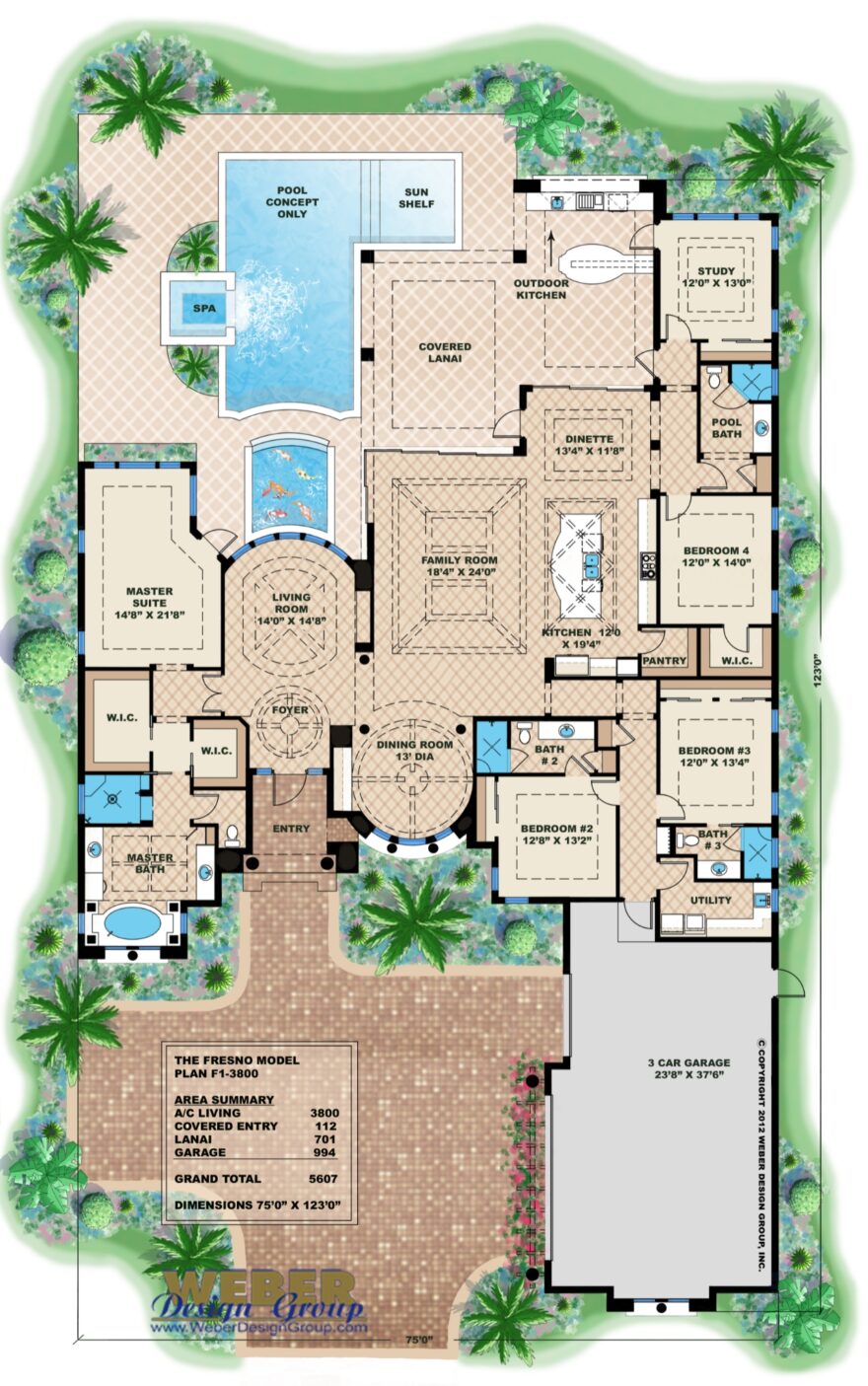
Good circulation also means movement through the house feels natural. Major traffic paths should not cut through seating areas or dining spaces, and the layout should feel intuitive to navigate.
Many of these design principles are explored further in our article on what makes a stock house plan well designed, which looks at the key characteristics of effective floor plan design.
Evaluate Bedroom Placement
Bedroom placement plays a significant role in comfort and privacy.
Many buyers prefer a split-bedroom layout, where the primary suite is separated from secondary bedrooms. This arrangement provides a quieter retreat for homeowners while still keeping family members or guests nearby.
Consider how bedrooms relate to both public and private spaces in the home. Bedrooms placed directly next to major living areas may experience more noise, while bedrooms positioned farther away often feel more private.
It is also helpful to think about flexibility. A bedroom near the front of the home may function well as a home office, study, or guest room as needs change over time.
Thoughtful bedroom placement can make the difference between a home that simply works and one that feels comfortable every day.
Consider Garage Placement and Access
The garage is often the most frequently used entrance to the home, so its placement should support everyday convenience.
Look carefully at the path from the garage to the kitchen or pantry. Carrying groceries across the entire house quickly becomes inconvenient if the layout is not practical.
Garage size also deserves careful attention. Modern vehicles are larger than they were decades ago, so adequate width and depth are important. Extra space for storage, tools, or recreational equipment can also add long-term value.
Finally, evaluate how the garage integrates with the front elevation of the home. A well-designed plan balances the garage with windows, entry features, and architectural elements to maintain curb appeal.
Consider Construction Efficiency
One of the major advantages of purchasing a stock house plan is construction efficiency.
Stock plans have already been professionally designed and refined. Many have been built multiple times, which means design issues are often resolved before construction even begins.
Developing a fully custom home design can take months of architectural work, revisions, and engineering. In contrast, purchasing a stock plan provides a proven design starting point that can still be modified if needed.
Another important concept is value engineering. Value engineering focuses on designing homes that balance aesthetics, function, and construction cost.
For example, kitchens, bathrooms, and laundry rooms are often located near each other so plumbing systems can be installed more efficiently. Structural walls may align from floor to floor, which simplifies framing and improves structural performance.
These design strategies reduce complexity during construction and can help keep the project on budget.
Choosing a house plan that incorporates these efficiencies often leads to a smoother building process and better overall value.
Plan for the Future
Finally, consider how the home will function over time.
Lifestyle needs often change. Children grow older, work-from-home needs increase, and entertaining styles evolve.
Flexible spaces such as bonus rooms, studies, guest suites, or adaptable bedrooms can help a home remain functional for many years.
Even if you plan to live in the home long term, designing with flexibility and resale value in mind is always a smart decision.
Choose a Plan That Works as a Whole
The best house plans balance aesthetics, livability, and buildability.
Before purchasing a house plan, confirm that it fits your lot, supports your lifestyle, and can be constructed efficiently. Taking the time to evaluate these factors now can prevent costly changes later.
When all of these elements come together, the result is a home that not only looks beautiful on paper but also performs beautifully in real life.