How to Choose Between a One-Story and Two-Story House Plan
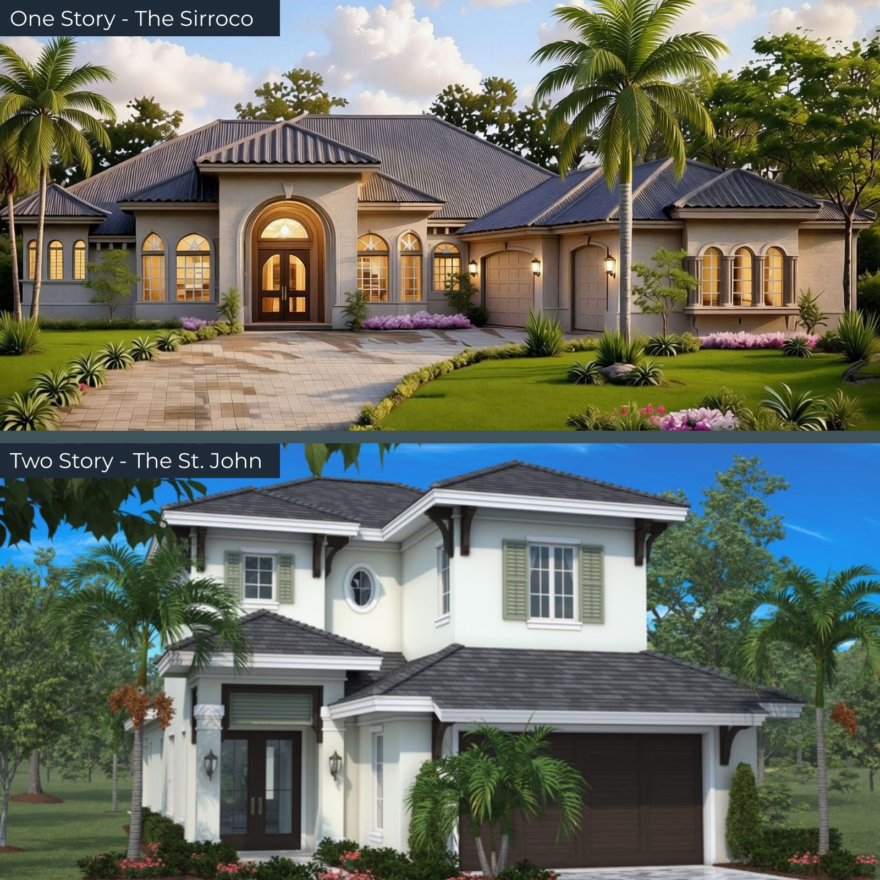
Choosing between a one-story and two-story house plan is one of the most important decisions in the home design process.
Many buyers focus only on square footage or number of bedrooms. However, the number of stories affects how the home fits your lot, how it functions daily, and how it performs over time.
Understanding these differences will help you choose a house plan that works for your lifestyle, your property, and your long-term goals.
1. How the Home Fits Your Lot
Start with your lot.
A one-story house plan requires a wider footprint. All living space sits on one level, so the home spreads across the property.
This works well on:
• wide lots
• corner lots
• waterfront properties
However, on narrower lots, a one-story design may feel limited.
A two-story house plan stacks space vertically. This reduces the footprint and allows more living space on a smaller lot.
This makes two-story homes ideal for:
• narrow lots
• urban areas
• properties with limited width
In many cases, your lot will guide this decision early.
2. Construction Cost and Budget
Cost is not always as simple as one story versus two.
One-story homes often require:
• larger foundations
• more roofing
• more site work
Two-story homes reduce the footprint, which can lower foundation and roof costs. However, they add:
• structural framing for a second level
• stairs
• additional labor
Because of this, total cost often depends on the design, not just the number of stories.
From a budget standpoint, it is important to evaluate how efficiently the plan uses space and how it fits your building goals.
3. Daily Living and Function
Think about how you will use the home every day.
One-story homes offer:
• easy access to all rooms
• no stairs
• simple movement throughout the home
This creates a very comfortable and convenient living experience.
Two-story homes separate living areas vertically.
Most layouts place:
• main living areas on the first floor
• bedrooms on the second floor
This creates:
• more privacy
• quieter sleeping areas
• separation between daily activities
Each option supports a different lifestyle.
4. Maintenance and Long-Term Upkeep
Maintenance is often overlooked when choosing a house plan.
One-story homes are generally easier to maintain. Exterior tasks like cleaning windows, painting, and roof access are more manageable.
Two-story homes may require:
• more effort for exterior maintenance
• professional services for certain tasks
Interior maintenance can also differ. For example, HVAC systems and vertical systems may be more complex in a two-story home.
Considering long-term upkeep early can help avoid surprises later.
5. Energy Efficiency
Energy performance can vary based on the structure of the home.
One-story homes spread out horizontally. This can increase roof exposure and may impact heating and cooling efficiency.
Two-story homes stack living space. This can help reduce the overall building envelope and improve efficiency in some climates.
However, warm air rises. In a two-story home, the upper level may require additional cooling.
Proper insulation, window placement, and system design matter more than the number of stories alone.
6. Privacy and Noise Separation
Privacy is an important factor in how a home feels.
One-story homes place all rooms on the same level. This can make it easier to stay connected, but it may reduce separation between living and sleeping areas.
Two-story homes naturally separate spaces.
Bedrooms on the upper floor often feel:
• quieter
• more private
• removed from main living areas
This layout works well for families or homeowners who entertain frequently.
7. Safety Considerations
Safety is another important consideration.
One-story homes eliminate the need for stairs, which can be beneficial for:
• young children
• long-term accessibility
• ease of movement
Two-story homes require stair use, which should be considered for daily living and future needs.
However, two-story homes can also provide a sense of security, especially for bedrooms located on the upper level.
Both options can be designed safely. The key is choosing what best fits your household.
8. Lifestyle and Health Benefits
An often overlooked benefit of two-story homes is movement.
Stairs naturally encourage daily physical activity. Over time, this can contribute to overall health and mobility.
While this may not be a deciding factor, it is an added lifestyle benefit that some homeowners appreciate.
One-story homes, on the other hand, prioritize convenience and ease of use.
9. Exterior Design and Architectural Style
The number of stories plays a major role in how a home looks from the outside.
One-story homes often emphasize:
• horizontal lines
• expansive layouts
• strong indoor-outdoor connections
Two-story homes allow for:
• more vertical architectural elements
• layered rooflines
• balconies and upper-level details
This can create opportunities for more exterior embellishments and visual interest.
The choice often comes down to the architectural style you prefer.
10. Views and Orientation
Consider what you want to see from your home.
Two-story homes can capture elevated views such as:
• water
• golf courses
• surrounding landscapes
This can significantly enhance the living experience.
One-story homes connect more directly to outdoor spaces. This creates a strong relationship between indoor living and the backyard.
View orientation and lot positioning should play a key role in your decision.
Choosing the Right House Plan for You
There is no one-size-fits-all answer.
The best choice depends on:
• your lot
• your lifestyle
• your budget
• your view orientation
• your long-term plans
A one-story home offers simplicity, accessibility, and open living. A two-story home offers flexibility, privacy, and efficient use of space.
When reviewing house plans, focus on how the design fits your property and how the layout supports the way you live.
Choosing the right structure from the beginning will help ensure your home not only looks beautiful, but also performs well for years to come.