How Exterior Materials Change the Personality of a House Plan

A house plan establishes the shape, scale, and overall form of a future home. However, the exterior materials give that form much of its personality. The same basic design can feel relaxed, refined, rustic, coastal, or contemporary depending on the finishes selected.
Color matters, but material does even more. Stucco creates a different visual effect than siding. Stone adds weight and texture. Shutters can bring charm or contrast. Meanwhile, the roof often sets the tone before any smaller detail is noticed.
The renderings in Weber Design Group’s collection show how these choices work together. They also demonstrate why exterior selections should be viewed as a complete composition rather than a list of separate products.
Stucco Can Feel Clean, Warm, or Refined
Stucco often creates a smooth, unified appearance. Its personality depends on the color, surrounding materials, roof choice, and amount of decorative detail.
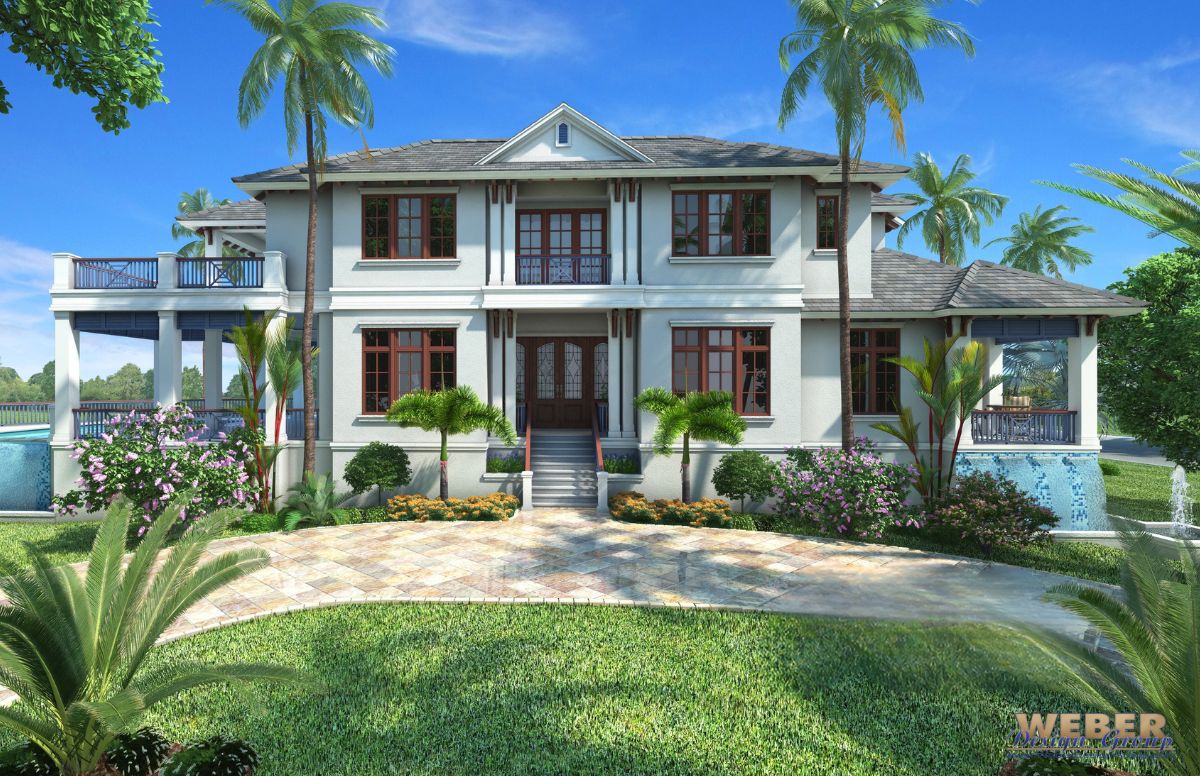
On the Mandevilla House Plan, light grey stucco establishes a polished Caribbean-inspired look. A tabby finish at the base adds texture. White precast banding introduces crisp contrast, while wooden brackets and rafter tails bring warmth. Together, those materials keep the large exterior from feeling flat or one-dimensional.
Stucco can also support Mediterranean, coastal, contemporary, and transitional styles. A warm cream finish may feel timeless and inviting. A soft white finish can appear bright and coastal. A deeper neutral can create a more grounded, modern impression.
Stone Adds Texture and Visual Weight
Stone naturally attracts attention because it introduces color variation, shadow, and an irregular texture. Even when used only as an accent, it can make the base of a home feel more substantial.
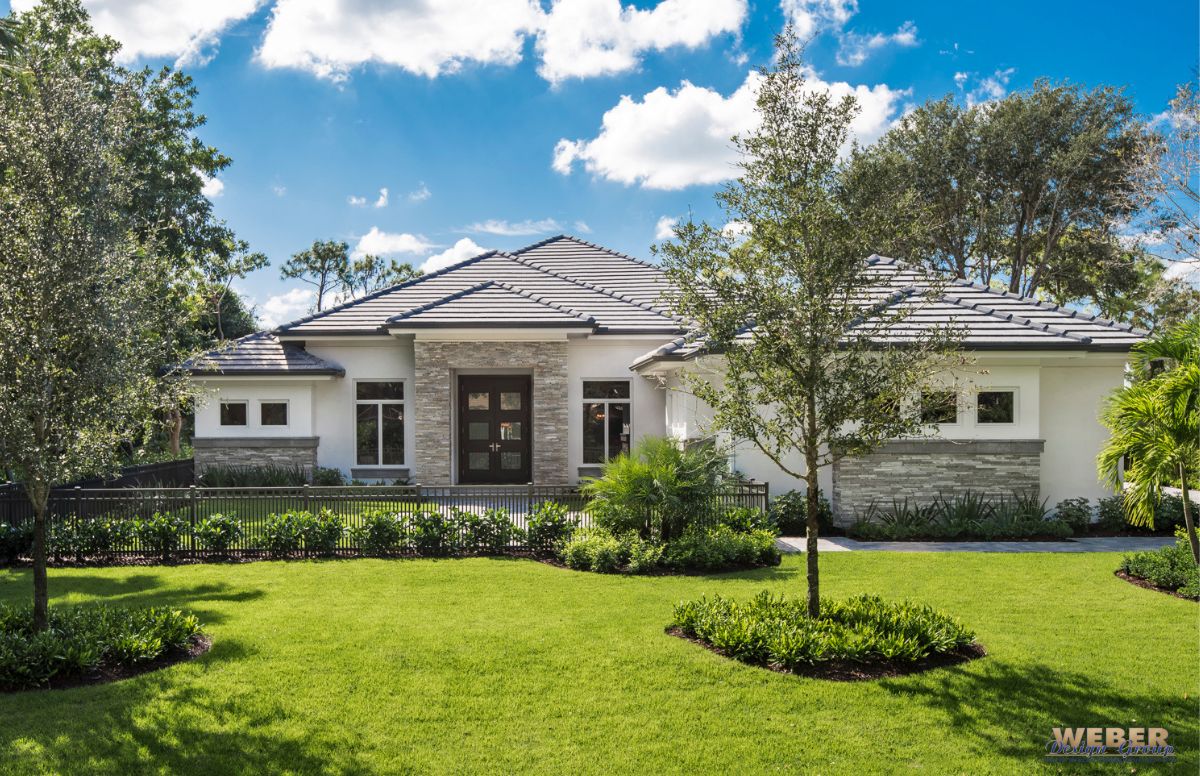
The Woodlake House Plan pairs stucco with stacked stone. In the rendering, stone grounds key areas of the front elevation while the lighter stucco keeps the overall design fresh. The contrast supports Woodlake’s transitional coastal personality. It feels polished, but not overly formal.
Placement changes the effect. Stone across the entire exterior can create a strong, established presence. Stone at the foundation, entry, columns, or selected wall sections offers a lighter touch. The color blend matters too. Soft grey stone feels different from warm tan, cream, or rust-toned stone.
Siding Changes the Rhythm of the Exterior
Siding adds visible lines to an elevation. Horizontal siding can makStacked stone adds texture and visual weight to the Woodlake House Plan, while light stucco keeps the exterior fresh and inviting.e a design feel familiar and relaxed. Vertical siding can emphasize height and create a cleaner, more current look. Wider or narrower profiles also change the scale of the exterior.
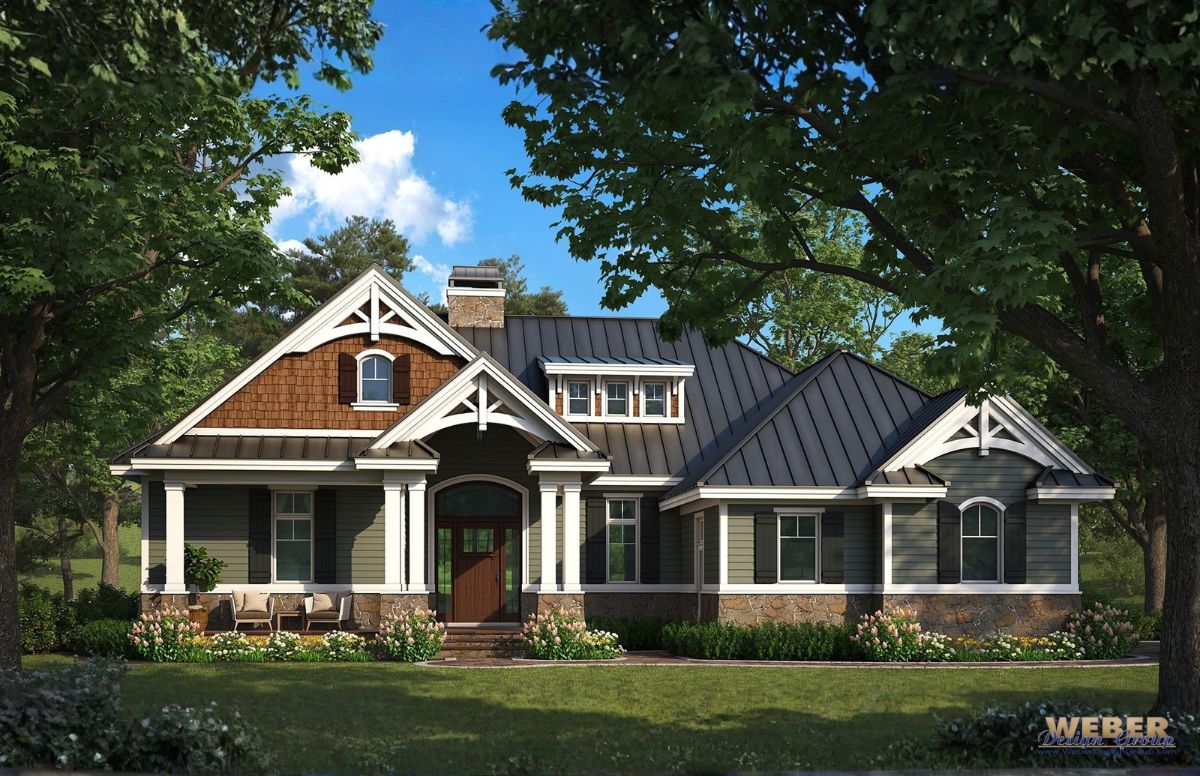
The Appalachian Trail House Plan uses Hardie board siding as a defining exterior material. The siding works with the simple rooflines and covered entry to create an approachable Craftsman-style appearance. Its texture gives the compact design character without making it feel busy.
Siding color also influences personality. White or pale siding may feel airy and casual. Deep blue, charcoal, or green can create a stronger statement. Warm neutrals often feel traditional and welcoming. Trim color can either soften the contrast or sharpen every edge.
Shutters Can Add Charm, Contrast, and Scale
Shutters may occupy a small portion of an exterior, yet they can noticeably change its character. They frame windows, introduce color, and add another layer of detail.
Dark shutters against pale stucco or siding create a crisp, classic contrast. Natural wood tones feel warmer and more casual. Soft blues and greens can reinforce a coastal direction. The shutter style matters as well. Louvered, paneled, board-and-batten, and Bahama-style shutters each create a different impression.
Scale is especially important. Shutters should feel proportionate to the windows they accompany. Their placement and style should also support the rest of the elevation rather than compete with it.
The Roof Helps Set the Overall Mood
Because the roof covers such a large visual area, its material, profile, and color strongly influence the home’s personality.
The Mandevilla rendering uses a concrete flat tile roof. The tile adds dimension and reinforces the home’s refined Caribbean influence. By contrast, Appalachian Trail uses a standing-seam metal roof. Its clean seams create a sharper outline and complement the plan’s straightforward Craftsman character.
Concrete or clay tile can add depth and an established presence. Metal roofing may feel crisp, coastal, farmhouse-inspired, or contemporary depending on the rest of the exterior. Shingles often create a softer and more familiar residential appearance.
The roof should not be selected in isolation. Its color needs to work with the main wall finish, stone, trim, doors, and other accents.
Accent Finishes Complete the Story
Small exterior elements often create the final layer of personality. Brackets, rafter tails, precast trim, tabby, wood-look details, metal awnings, doors, and window trim can shift the mood of a house plan.
Mandevilla offers a clear example. Its grey stucco creates the background, but the tabby base, white banding, wooden brackets, and rafter tails make the exterior distinctive. Remove those accents, and the same massing would feel much simpler.
Accent finishes work best when they repeat with purpose. A wood tone used at the entry might appear again beneath a porch roof. A dark metal roof may connect visually with dark window frames or exterior lighting. Repetition helps separate materials feel intentional.
Look at the Exterior as One Composition
When choosing finishes, begin with the personality you want the house plan to express. Then consider the largest surfaces first: the main wall material and roof. Add secondary materials, such as stone or siding, where they support the form of the home. Finally, use shutters, trim, doors, and other accents to complete the look.
It also helps to compare materials in the actual light and setting where the home will be built. Colors can change outdoors, and nearby landscapes may affect how warm or cool a finish appears.
Most importantly, the rendering should serve as inspiration rather than a substitute for final material decisions. Product availability, climate, maintenance needs, structural requirements, neighborhood guidelines, and local building codes can all affect the final selections. A local builder or qualified design professional can help confirm appropriate choices.
The floor plan may shape daily life inside the home. Yet from the street, exterior materials tell the first part of its story. With a thoughtful combination of texture, color, and detail, a house plan can take on a personality that feels completely its own.
Explore Weber Design Group’s house plan collection and imagine how your favorite exterior materials could bring each design to life.