Why Ceiling Height Changes the Way a Home Feels
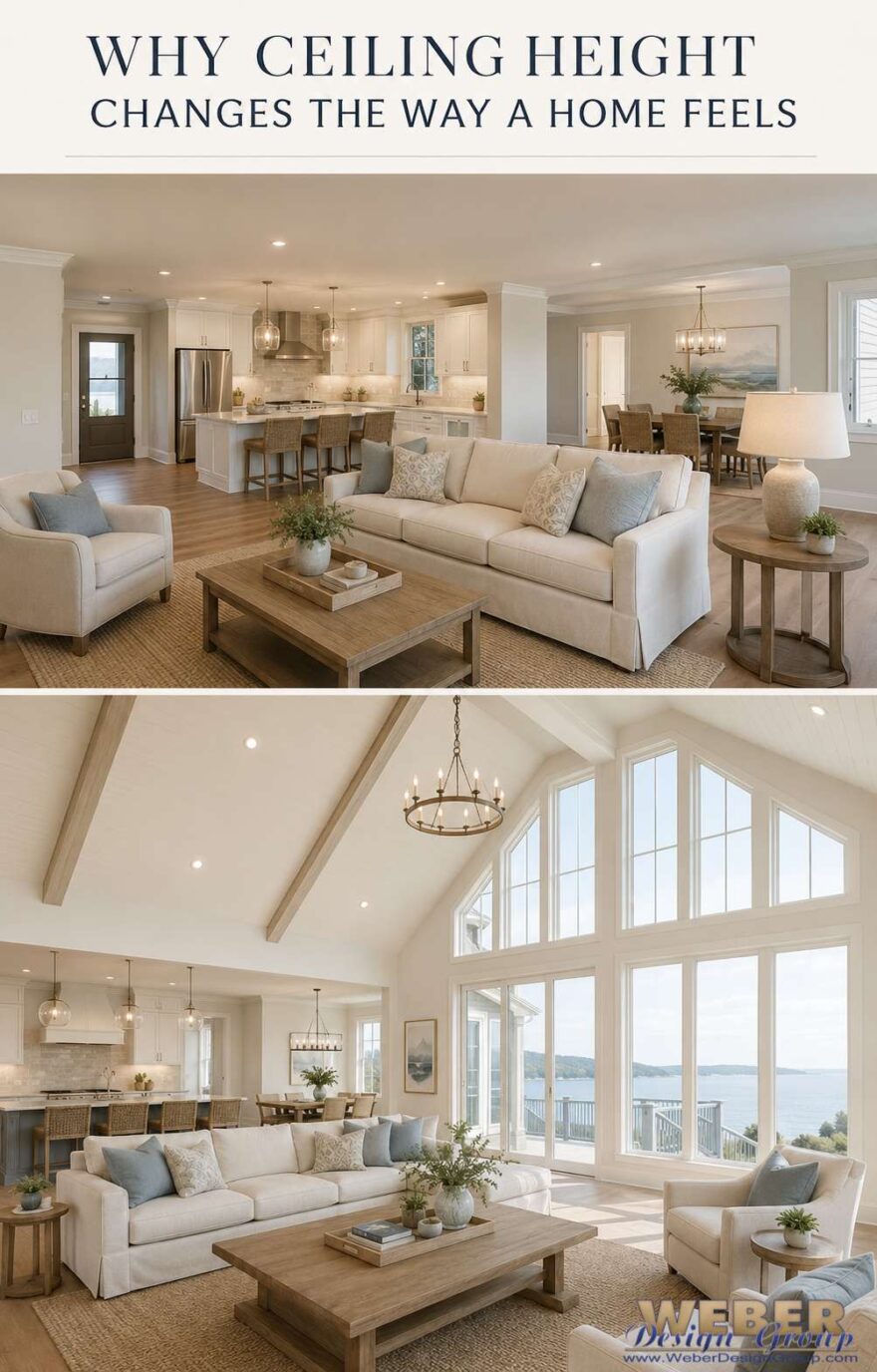
Two homes can have similar square footage and completely different atmospheres. One may feel bright, open, and impressive. The other may feel cozy, intimate, and comfortable. Often, ceiling height helps create that difference.
Ceiling height affects more than the appearance of a room. It influences natural light, visual proportions, furniture placement, and even how people experience the space. Therefore, it is an important detail to consider when choosing a house plan.
Higher Ceilings Create a Greater Sense of Space
A higher ceiling draws the eye upward. This makes a room feel larger, even when its actual floor area remains unchanged.
For example, a great room with a high ceiling can feel more expansive and dramatic. It also creates opportunities for taller windows, statement lighting, and distinctive ceiling details. These features can give an important gathering space a stronger visual presence.
However, every room does not need an especially high ceiling. Strategic changes in height often create more impact than using the same ceiling treatment throughout the house.
Ceiling Height Helps Define Open Living Areas
Open-concept house plans combine several living spaces without relying on many interior walls. As a result, the ceiling can help visually organize the layout.
A raised or detailed ceiling may distinguish the great room from the kitchen and dining area. Meanwhile, beams, tray ceilings, coffers, or changes in ceiling height can establish subtle boundaries between spaces.
These details preserve the open layout while giving each area its own identity. They can also make a large, open room feel more intentional and balanced.
Lower Ceilings Can Make a Space Feel More Intimate
Higher ceilings are not always the best choice for every room. A lower ceiling can create a sense of warmth, comfort, and enclosure.
This effect works especially well in smaller sitting areas, breakfast spaces, studies, and private retreats. These rooms often benefit from a more intimate atmosphere.
The contrast between lower and higher ceilings can also make a house plan feel more dynamic. Moving from a comfortable entry or hallway into a great room with a taller ceiling creates a memorable sense of arrival.
Ceiling Height Influences Natural Light
Ceiling height and window placement often work together. Taller walls can provide room for larger windows or additional glass above standard openings.
These windows may allow daylight to reach deeper into the living area. They can also draw attention to outdoor views and strengthen the connection between indoor and outdoor spaces.
Still, ceiling height alone does not guarantee a brighter room. The direction of the windows, nearby covered areas, and surrounding landscape also influence natural light. A successful house plan considers all these elements together.
Proportion Matters More Than Height Alone
A ceiling should feel appropriate for the size and purpose of the room. A very high ceiling in a small space may feel out of proportion. Likewise, a broad great room may feel less open with a ceiling that appears too low for its scale.
Furniture and cabinetry also affect these proportions. Taller ceilings can accommodate large windows, substantial fireplaces, oversized artwork, and dramatic lighting. However, these rooms may require larger furnishings to keep the space visually balanced.
Conversely, standard-height ceilings may work beautifully in smaller rooms because they complement the room’s scale.
Ceiling Details Add Character
Height is only one part of ceiling design. The shape and detailing of a ceiling also affect how a home feels.
Popular ceiling treatments may include:
• Tray ceilings that add subtle depth
• Coffered ceilings that bring structure and visual interest
• Beams that introduce warmth and character
• Vaulted ceilings that follow the roofline
• Stepped ceilings that emphasize specific living areas
• Decorative ceiling designs that help define open spaces
These features can support many different house plan styles. The appropriate treatment depends on the room, exterior design, and overall character of the house.
Ceiling Height Can Affect Practical Decisions
Higher ceilings may influence more than appearance. They can affect lighting choices, window treatments, acoustics, heating, cooling, and maintenance.
For example, tall spaces may require longer drapery panels or specialized equipment for changing light bulbs. Large rooms with hard surfaces may also need rugs, upholstered furniture, or other soft materials to control sound.
Heating and cooling performance depends on many factors, including insulation, window placement, climate, and the home’s mechanical systems. Therefore, ceiling height should be considered as part of the complete house design.
Look Beyond the Floor Plan
When reviewing a house plan, it is easy to focus on room dimensions and placement. However, those details show only part of the experience.
Ceiling heights and ceiling designs help reveal how each room may actually feel. They can make spaces appear larger, establish comfortable transitions, highlight important rooms, and support the overall architectural style.
Before selecting a house plan, review the ceiling information carefully. Consider where dramatic height will add value and where a more intimate scale may feel appropriate. The right combination can turn a practical layout into a home that feels welcoming, balanced, and memorable.